


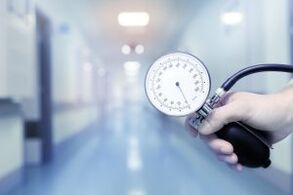
Arterial hypertension is a condition in which a persistent increase in blood pressure is determined to be 140/90 mm Hg. Art.This pathology is detected in 40% of the adult population and often occurs not only in older people, but also in adolescents, young adults and pregnant women.It has become a true “epidemic of the 21st century” and doctors in many countries recommend that everyone measure their blood pressure regularly, starting at the age of 25.
According to statistics, only 20-30% of patients with high blood pressure receive adequate treatment, and only 7% of men and 18% of women regularly monitor their blood pressure.In the early stages, high blood pressure is asymptomatic or is detected accidentally during examinations or when patients consult a doctor for treatment of other diseases.This leads to the progression of pathology and a significant deterioration in health.Many patients with high blood pressure who do not consult a doctor or simply ignore the doctor's recommendations and do not receive constant treatment to bring blood pressure to normal levels (no more than 130/80 mm Hg) are at risk of serious complications of this pathology: stroke, myocardial infarction, heart failure, etc.
Development mechanisms and classification

The increase in blood pressure is due to a narrowing of the lumen of the main arteries and arterioles (smaller branches of the arteries), caused by complex hormonal and nervous processes.When the walls of blood vessels narrow, the work of the heart increases and the patient develops essential (that is, primary) hypertension.This pathology occurs in 90% of patients.In the remaining 10%, hypertension is symptomatic (i.e. secondary) and is caused by other diseases (usually cardiovascular).
Essential hypertension (or hypertension) does not develop as a result of damage to an organ.Subsequently, this leads to target organ damage.
Secondary hypertension is caused by disturbances in the functioning of systems and organs involved in the regulation of blood pressure, that is, an upward change in blood pressure is a symptom of the underlying disease.They are classified into:
- renal (parenchymal and renovascular):develop as a result of congenital or acquired hydronephrosis, acute or chronic glomerulo- and pyelonephritis, polycystic kidney disease, radiation kidney disease, diabetic glomerulonephrosis, etc.
- hemodynamic (mechanical and cardiovascular):develop with aortic valve insufficiency, complete atrioventricular block, aortic atherosclerosis, open aortic duct, aortic coarctation, Paget's disease, arteriovenous fistulas, etc.
- endocrine:develop with pheochromocytoma (a hormonally active tumor of the adrenal glands), paragangliomas, Cohn syndrome, acromegaly, Itsenko-Cushing syndrome or disease, etc.
- neurogenic:develop with diseases and focal lesions of the spinal cord and brain, hypercapnia (an increase in the amount of carbon dioxide in the blood) and acidosis (a shift in the acid-base balance towards acidity);
- others:develop with late toxicosis during pregnancy, thallium and lead poisoning, carcinoid syndrome (blood poisoning with excess hormones), porphyria (hereditary disorder of pigment metabolism), overdose of glucocorticoids, ephedrine, catecholamines, taking hormonal contraceptives, eating foods containing tyramine while taking inhibitors ofMAO.
Depending on the nature of the development, high blood pressure can be:
- transient:an increase in blood pressure is observed sporadically, lasts from several hours to several days and normalizes without the use of medications;
- labile:blood pressure increases due to the influence of any provoking factors (physical or psycho-emotional stress), medications are required to stabilize the condition;
- stable :the patient has a constant increase in blood pressure and serious and constant treatment is necessary to normalize it;
- crisis :the patient experiences periodic hypertensive crises;
- clever:blood pressure reaches high levels, the pathology progresses rapidly and can lead to serious complications and death of the patient.
High blood pressure is classified according to its severity as follows:
- I degree: blood pressure rises to 140-159_90-99 mm Hg. Art.;
- Degree II: blood pressure rises to 160-170/100-109 mm Hg. Art.;
- Degree III: blood pressure rises to 180/110 mm Hg. Art.and higher.
In isolated systolic hypertension, only an increase in systolic pressure above 140 mmHg is typical.Art.This form of hypertension is more often observed in people over 50-60 years old, and its treatment has its own characteristics.
Signs of high blood pressure

Patients with high blood pressure may experience headaches and dizziness.
For many years, patients may not be aware of the presence of high blood pressure.Some of them, during the initial period of hypertension, notice episodes of weakness, dizziness and discomfort in their psycho-emotional state.With the development of stable or labile hypertension, the patient begins to complain of:
- general weakness;
- flickering of flies before the eyes;
- nausea;
- dizziness;
- throbbing headaches;
- numbness and paresthesia of the limbs;
- shortness of breath;
- difficulty speaking;
- heart pain;
- swelling of the limbs and face;
- visual impairment, etc.
When examining the patient, lesions are revealed:
- kidneys: uremia, polyuria, proteinuria, renal failure;
- brain: hypertensive encephalopathy, stroke;
- heart: thickening of the heart walls, left ventricular hypertrophy;
- vessels: narrowing of the lumen of arteries and arterioles, atherosclerosis, aneurysms, aortic dissection;
- fundus: hemorrhages, retinopathy, blindness.
Diagnosis and treatment
Patients with signs of high blood pressure may be prescribed the following types of tests:
- blood pressure measurement;
- general urine and blood tests;
- biochemical blood test to determine the level of total cholesterol, lipoprotein cholesterol, creatinine, potassium, glucose and triglycerides;
- ECG;
- Echo-CG;
- fundus examination;
- Ultrasound of the kidneys and abdominal cavity.
If necessary, the patient may be recommended to undergo additional examinations.After analyzing the data obtained, the doctor selects a treatment regimen and gives detailed recommendations on changing the patient's lifestyle.